Private investment and increased government support! The Industrial Development Agency's "Venture Capital Acceleration Innovation and Entrepreneurship Program" has upgraded its second round of applications for the first batch of 10 approved projects, whic
The Industrial Development Administration (IDA), Ministry of Economic Affairs, held a press conference today (29th) to announce the specific results of the first batch of the "Venture Capital Accelerated Innovation and Entrepreneurship Program" and the launch of the second batch. The program adopts a "private sector invests first, government adds more" model, combining Corporate Venture Capital (CVC), Venture Capital (VC), and government subsidy resources to assist promising startups in accelerating technology commercialization and market implementation. The results of the first batch are outstanding, with 10 cases approved in the first wave and a total subsidy amount of approximately NT$176 million, which is expected to successfully guide private-led investments up to NT$1.25 billion. The second batch will be further upgraded, and it is estimated to drive an overall investment benefit of over NT$10 billion in the next four years.
Breaking Traditional Subsidy Limits: Two Major Innovative Features Align with Market Mechanisms
IDA Director General Chyou-Huey Chiou stated that the biggest feature of the "Venture Capital Accelerated Innovation and Entrepreneurship Program" lies in completely transforming the evaluation thinking of past government subsidy cases, featuring two core differences. First is replacing "traditional technical review" with "market mechanisms." Past subsidies often focused heavily on academic and technical indicators, which could easily lead to insufficient assessment of market demand. This program comprehensively introduces market validation, where venture capitals who know the market best conduct early evaluations, commit to investments, and share risks, ensuring that government resources accurately meet market needs. Second is drastically simplifying the process and shortening the review time by 70%. It cancels the traditional, complex committee review and directly enters the final review process with practical investment agreements. Through process streamlining, the review time that used to take over 100 days has been significantly shortened to 30 days, helping startups implement commercial development at critical moments and seize market opportunities.
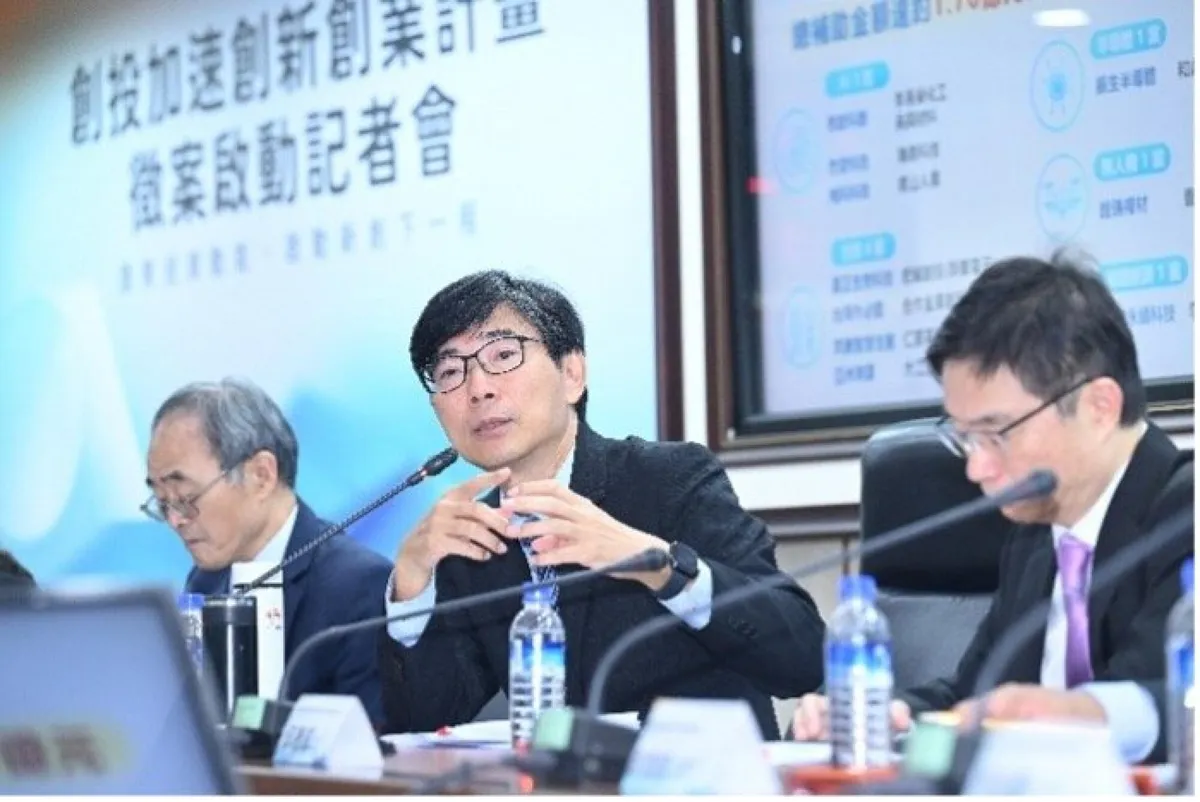
IDA Director General Chyou-Huey Chiou estimates that after the upgrade of the second batch, it will drive an overall investment benefit of over NT$10 billion over the next four years.
Image / Industrial Development Administration, MOEA
In the first batch, the program has approved 10 outstanding startups, spanning five key industries: AI, semiconductors, drones, biotechnology, and circular economy. Examples include Anghong Sci-Tech, Jiefa Technology, and Meike Technology in the AI field; Zhensheng Semiconductor in the semiconductor field; Quanrui Composites focusing on key drone technologies; Jiazheng Biotechnology, Taiwan Exosome, Benteng Smart Biomedical, and Asian Pathogenomics in the biotech field; as well as Peide Sustainable Technology in the circular economy sector. Investors include LCY Chemical Corp., Eternal Materials, Raydium Semiconductor, Nan Shan Life Insurance, Pegatron and Heding VC, Fengzhao Aerospace, UMC Capital, Taiwan Cooperative Financial Holding VC, Compal Electronics, TCI Co., Ltd., Litz Technologies, and more. Major parent groups are pouring their resources into these highlighted startups, fully demonstrating the tremendous resonance the program has created across various industries.
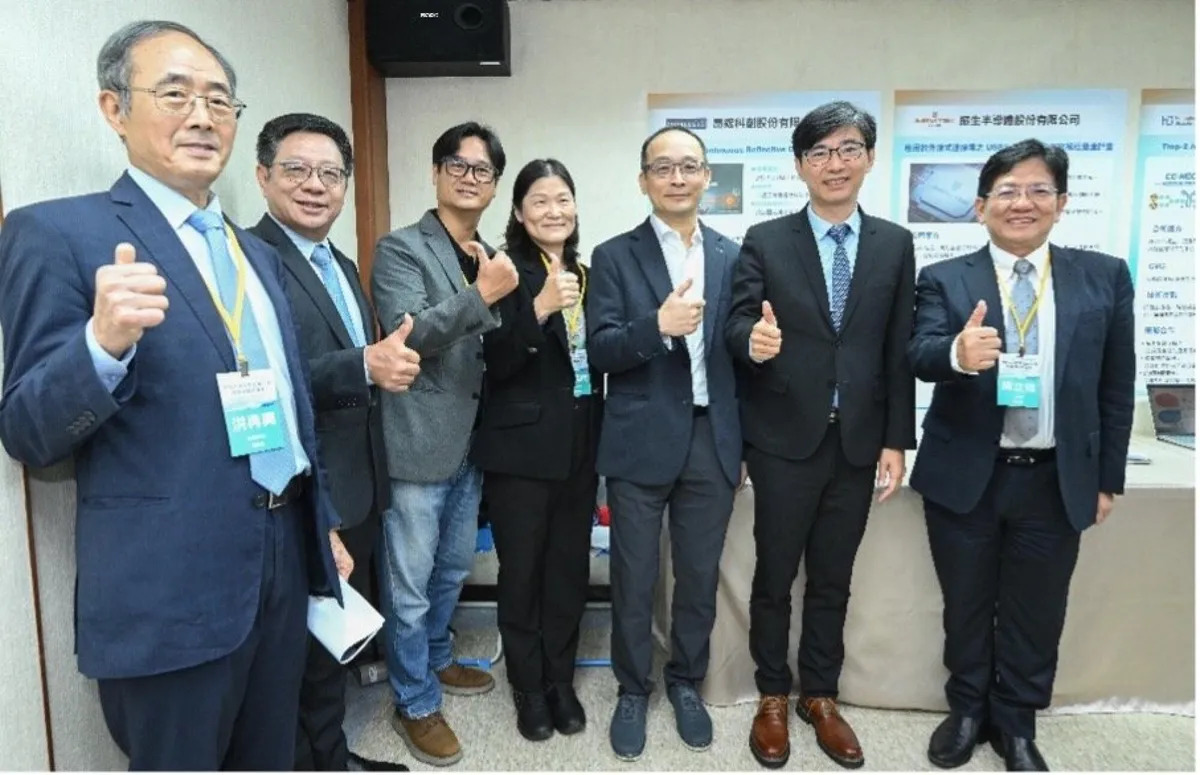
Anghong Sci-Tech focuses on AI-native platforms for the process manufacturing industry, assisting enterprises in promoting digital transformation, industrial AI applications, smart operations, and autonomous decision-making. From left: Tsai-Hsing Hung (Chairman of LCY Chemical Corp.), David Weng (Taiwania Capital Management Corporation), Ying-Che Weng (Chairman of Anghong Sci-Tech), Jui-Hsin Chu (Vice President of Eternal Materials), Yi-Chou Chen (CEO of Anghong Sci-Tech), Chyou-Huey Chiou (Director General of IDA), and Li-Wei Chen (General Director of ITRI).
Image / Industrial Development Administration, MOEA
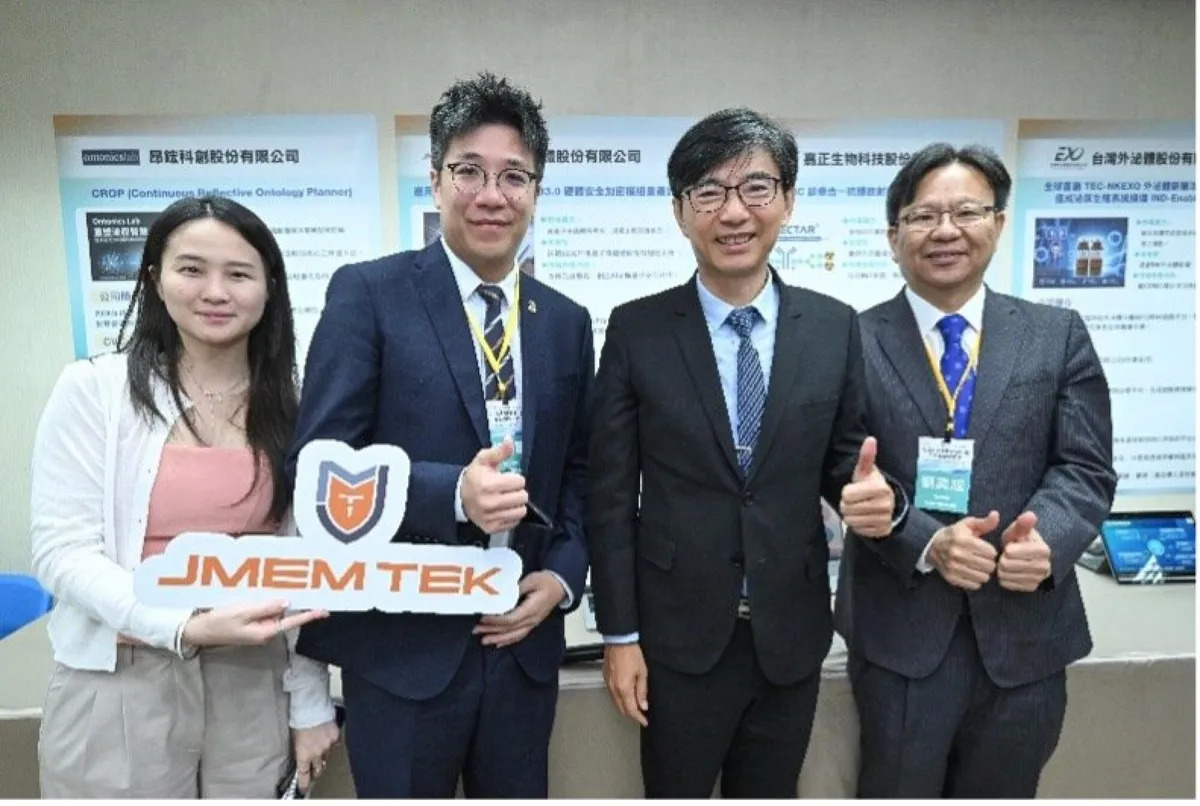
Zhensheng Semiconductor provides hardware security IP (PUF+PQC) and IC design for the post-quantum era, serving AI servers, defense, and data centers, with the global semiconductor security supply chain as its target market. From left: Yun-Fan Chen (Strategy Director of Zhensheng Semiconductor), Chen-Feng Chang (Founder and CEO of Zhensheng Semiconductor), Chyou-Huey Chiou (Director General of IDA), and I-Cheng Liu (Vice Chairman and President of Heding VC).
Image / Industrial Development Administration, MOEA
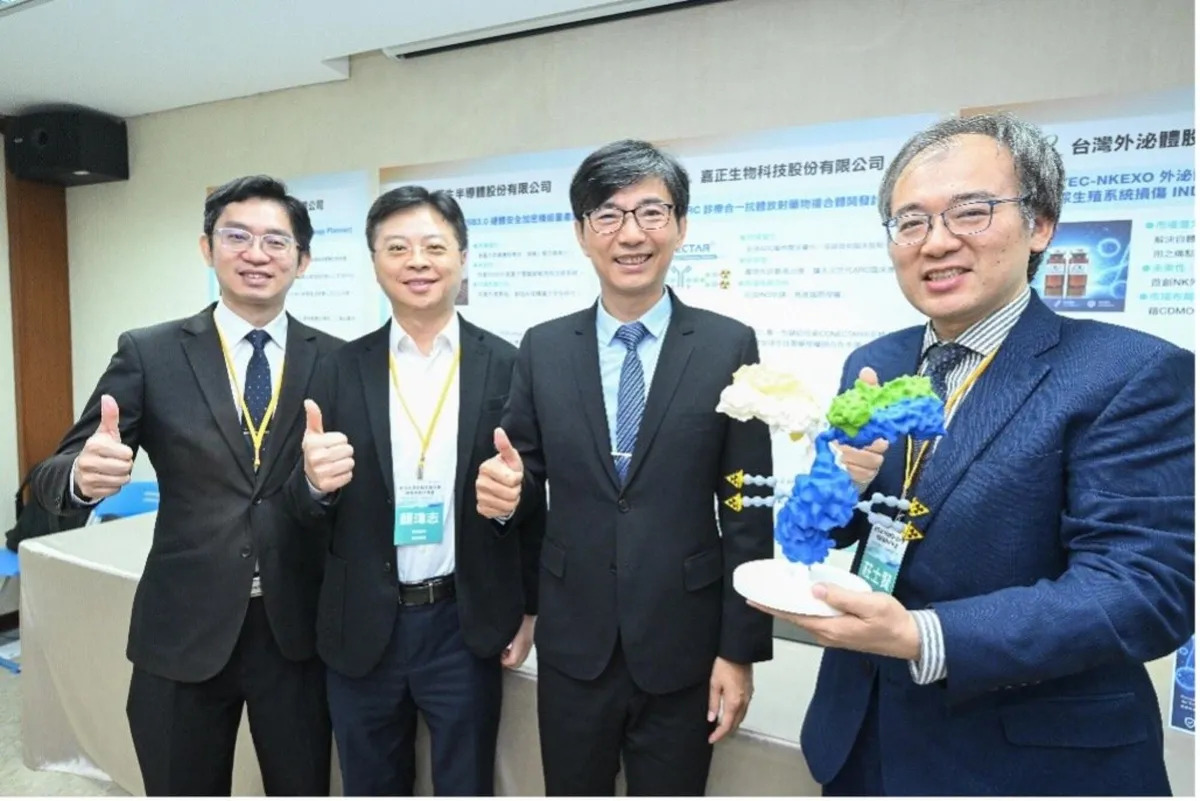
Jiazheng Biotechnology develops anti-cancer drugs using its Antibody-Drug Conjugate (ADC) site-specific conjugation technology CONECTAR® and precision targeted radionuclide therapy (ARC) platform. From left: Neng-Kai Chang (Division Director of IDA), Wei-Chih Yen (Vice President of UMC Capital), Chyou-Huey Chiou (Director General of IDA), and Shih-Hsien Chuang (CEO of Jiazheng Biotechnology).
Image / Industrial Development Administration, MOEA
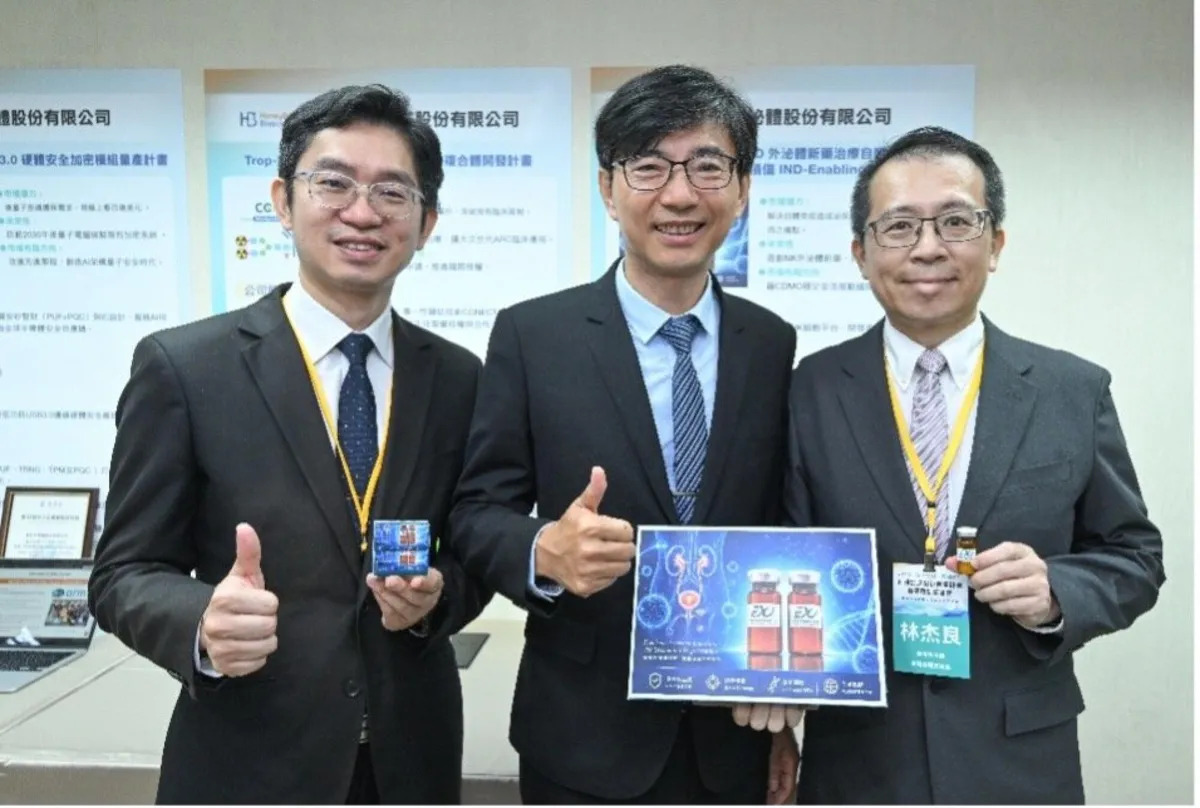
Taiwan Exosome Co., Ltd. develops new regenerative medicine drugs, focusing on clinical-grade exosome isolation and purification and NK cell platforms, targeting the global pharmaceutical markets for cancer, autoimmune diseases, and anti-aging. From left: Neng-Kai Chang (Division Director of IDA), Chyou-Huey Chiou (Director General of IDA), and Chieh-Liang Lin (COO of Taiwan Exosome).
Image / Industrial Development Administration, MOEA
Two Major Upgrades in the Second Batch: Expanding Investment Capacity and Flexible Subsidies
The IDA simultaneously announced the official launch of the expanded call for proposals for the second batch, with optimizations and adjustments based on the execution experience of the first wave. First is further relaxing investor qualifications to expand the introduction of VCs: compared to the first batch which was limited to CVC participation, the second batch specifically includes VCs to form joint teams, comprehensively multiplying the investment capacity. Additionally, an investment-attracting benefit mechanism has been planned for the program subsidies. If a startup receives a "lead investment" of NT$30 million from a qualified venture capital firm, the government will subsidize up to NT$20 million; if it further attracts 2 or more venture capitals who are optimistic and "co-invest" NT$20 million each, the maximum government subsidy can be increased to NT$30 million, comprehensively encouraging venture capitals to increase their investments.
IDA Director General Chyou-Huey Chiou pointed out that the core positioning of the "Venture Capital Accelerated Innovation and Entrepreneurship Program" lies in linking resources and assisting businesses in expanding commercial opportunities. Building on the strong foundation laid by the first batch's results, and through the precise allocation of program funds, it is expected to partner with leading venture capitals. By continuously utilizing the "market mechanism selection" and "large enterprise leading small enterprise" models, it will jointly drive substantial investment benefits exceeding NT$10 billion, comprehensively accelerating the upgrade of Taiwan's core industries and building an internationally competitive future for industrial innovation in Taiwan.